
What is a visual novel? A definition you can watch
Characters who face each other, a box that names the speaker, a narrator between the lines: the visual novel, one scene at a time.
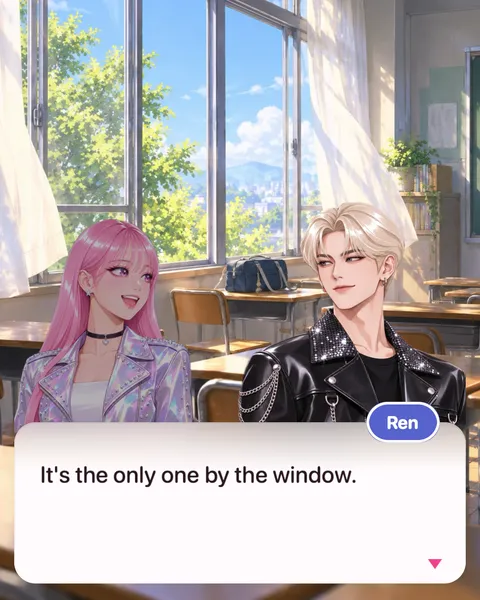
A visual novel is a story you read on a screen, one line at a time. Characters stand in front of a painted place, their words arrive in a box at the bottom, and a tap or a click moves the story on.
That’s the short answer. The longer one: visual novels are a video game genre from Japan, focused on telling a story through text boxes, pictures of the characters and background art. In Japan they are often called novel games. The English term took hold in the mid-1990s, and Leaf’s Shizuku (1996) was the first commercial game to be described as one.
The quickest way to understand a visual novel is to watch a scene.
Watch a scene
Here is the whole script:
Title card: Chapter One
ALARIC: The gate is a day’s walk.
ADAEZE: I parked my ship closer.
It’s short, and it holds almost everything that makes a visual novel.
Five things you watched
A place
The painted mountain pass is the background. Visual novels change it whenever the scene moves: a classroom, a street at night, the bridge of a ship. A change of place matters, so engines such as Ren’Py offer transitions for it.
Characters
Alaric and Adaeze are character pictures laid over the background. Ren’Py, the free engine behind thousands of visual novels, calls them sprites. They don’t walk around. They come and go, and they swap one picture for another when their mood changes.
A speaker and a listener
In the clip, the speaker is lit and in front, and the listener waits a size smaller and a shade darker. The characters face each other, so the scene reads as a conversation. You know who is talking before you read a word.
A box with a name
The words sit in a box low on the screen, with the speaker’s name above it in their own color. The example script in Ren’Py’s quickstart gives each character a name color in its very first lines.
Words that belong to nobody
“Chapter One” is a title card: no one says it. Visual novels also have narration, lines no character speaks. That same example shows exactly this: “a conversation between two characters, and a line of narration.”
In a game, you tap to see the next line, so you set the pace. In a video, every line is timed for reading instead.
The words fans use
ADV and NVL. The two common layouts. ADV (short for adventure) puts the box over part of the screen, as in the clip. NVL (for novel) fills almost the whole screen with text.
CG. A unique, full-screen illustration, usually shown at a big moment in the story.
Choices and branches. Many visual novels let you choose what to say or do, and the story branches. Steins;Gate 0 (2015) has six endings and two main story branches. 428: Shibuya Scramble (2008) can end 85 ways.
Kinetic novel. A visual novel with no choices at all, read straight through. The name comes from the KineticNovel series by the company Visual Arts.
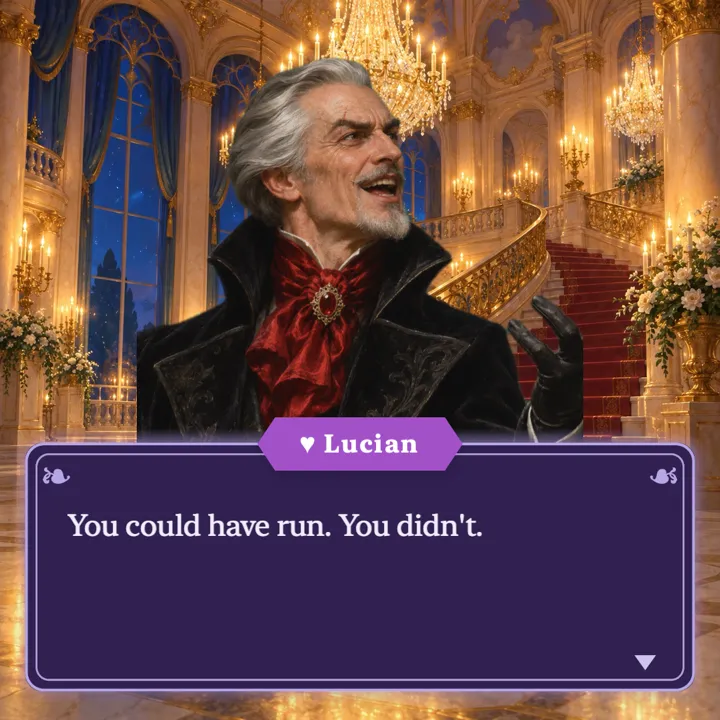
Otome game. Japanese visual novels often lean toward romance, and otome games bring anime-style art and several possible romantic partners. DialogCut’s Flirt theme stages that register: one face close up, an ornamented card, the name on a ribbon with a heart.
Visual novel examples
Six milestones, starting before the genre had a name.
- The Portopia Serial Murder Case (1983). Yuji Horii’s mystery, which Retro Gamer credits with defining the visual novel genre.
- Otogirisō (1992). Chunsoft called it a “Sound Novel”, a trademark of its own.
- Shizuku (1996). Leaf’s game, the first commercial release described as a visual novel.
- Phoenix Wright: Ace Attorney (2001). A courtroom visual novel. Its 2005 release in the West brought the genre new attention there.
- Higurashi: When They Cry (2002). Completely linear, with no branching choices at all.
- Doki Doki Literature Club! (2017). Made in Ren’Py, it subverts the genre’s romance tropes.
Where the box itself came from is a story of its own: A short history of the dialogue box.
A game or a video?
A visual novel is a game you read. You tap through it, and often you choose where it goes. Making one means writing its branches and building it in an engine. Ren’Py, first released in 2004, is free and open source, and over 7,800 visual novels had been made with it by 2023.
A visual novel style video keeps the same grammar and plays straight through, like a kinetic novel: a place, your characters, a box with a name, a narrator, every line timed for reading. You post it, and people watch.
Make a visual novel scene in DialogCut
- On the Stories tab, tap New story. In Choose Characters, tap New, type a name, tap the portrait button and choose Photo Library to pick your drawing. DialogCut removes the background. Tap Choose, make your second character the same way, and tap ✓.
- Tap Add › Background and pick a painted place from Sample Backgrounds, or your own picture with Open Gallery.
- Tap Add › Title Card for “Chapter One”. Tap a character in the bar to write their line, and Add › Narration for words no one says.
- Tap Preview, then Themes, and pick Novel. Turn on Marker for the visual novel’s bobbing ▼.
- Tap Export, then Start. When you see “It’s a wrap.”, tap Save video.
Write your first chapter
Your characters, a place and a few lines are all a scene needs. Get DialogCut on the App Store or Google Play.
Sources
- “Visual novel,” Wikipedia: https://en.wikipedia.org/wiki/Visual_novel
- “Quickstart,” Ren’Py Documentation: https://www.renpy.org/doc/html/quickstart.html
- “CG,” Wiktionary: https://en.wiktionary.org/wiki/CG
- “The Portopia Serial Murder Case,” Wikipedia: https://en.wikipedia.org/wiki/The_Portopia_Serial_Murder_Case
- “Doki Doki Literature Club!,” Wikipedia: https://en.wikipedia.org/wiki/Doki_Doki_Literature_Club!
- “Ren’Py,” Wikipedia: https://en.wikipedia.org/wiki/Ren%27Py